
POLICY RESOURCES
We develop advocacy materials to support prioritization of SCD at the global and local levels. We also advise national governments on their SCD policies and implementation plans. Since 2023, this has included direct work with governments of Uganda and Ghana.
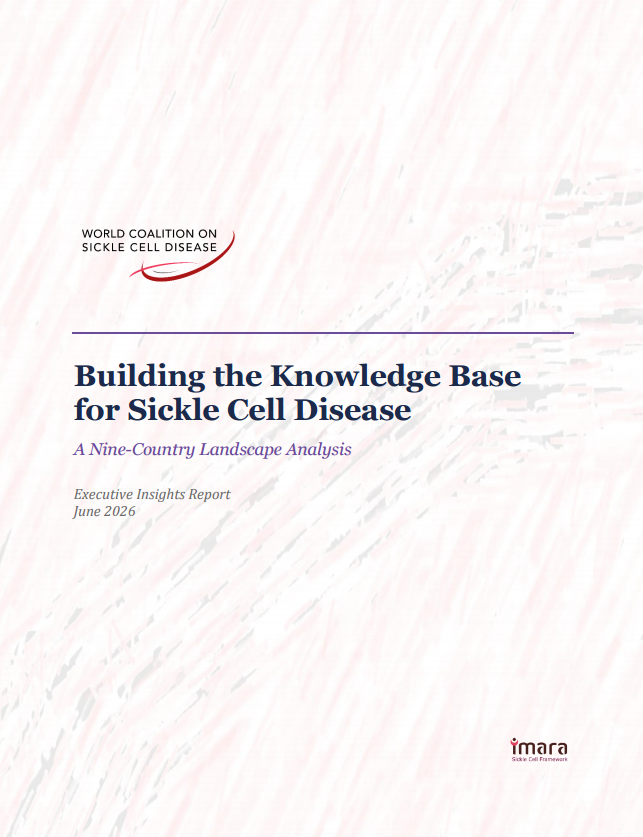
ReportBuilding the Knowledge Base for Sickle Cell Disease
This nine-country landscape analysis aims to strengthen the evidence base available to policymakers, advocates, funders, healthcare leaders and other stakeholders working to improve outcomes for people living with sickle cell disease.
The report examines the policies, programs and health-system conditions shaping SCD diagnosis, treatment and care in Burkina Faso, Côte d’Ivoire, the Democratic Republic of the Congo, Ghana, Kenya, Nigeria, Tanzania, Uganda and Zambia.
The series combines two complementary forms of analysis. The Executive Insights Report presents the major cross-country findings, thematic patterns and country-level takeaways emerging from the research. The accompanying Country Landscapes provide the detailed national evidence base underpinning those conclusions. The Country Landscapes will be launched in Q4 2026.
Together, these publications are intended to provide a shared foundation from which the SCD community can identify gaps, prioritize investment, strengthen collaboration and support the translation of policy commitments into sustained improvements in care.

Position PaperSICKLE CELL AND NCDS POSITION PAPER
We are calling on policymakers and global leaders to explicitly address the needs of children, youth and adolescents, with particular attention to Sickle Cell Disease (SCD), within the Political Declaration of the 2025 United Nations High-Level Meeting on NCDs. We believe this is a critical step toward achieving equitable health outcomes across all age groups, addressing the rising burden of NCDs, and ensuring no one is left behind in the global fight against chronic diseases.

ReportTHE UGANDA CASE STUDY: a blueprint for change - uganda’s approach to scd management
The WCSCD has developed a case study for how Uganda has prioritized and scaled newborn and infant screening for SCD. Through collaborative efforts, Uganda was able to transition from a research-based survey to a comprehensive public health strategy that integrated screening, awareness, and treatment initiatives.
Based on interviews with key government officials and desk research, it outlines the phases of Uganda’s disease management and shares lessons that other countries can emulate. The study also acknowledges that challenges remain. In an effort to provide a blueprint for other high-burden countries grappling with SCD, this case study sheds light on Uganda’s journey.
ReportWHITE PAPER: SCD - opportunities for action
While efforts to tackle SCD have gained some momentum in recent years, funding for Sickle Cell Disease initiatives at all levels is not commensurate with the growing global need. Stakeholders from across sectors can improve SCD outcomes at the population level via the provision of treatment and care, and, in the future, via curative approaches such as gene therapy and other innovations. Cross-sector collaboration can support governments as they implement the policy recommendations from the Lancet Haemotology Commission on Sickle Cell Disease. This paper conceptualizes the five priority action actions policymakers should take to accelerate efforts combatting Sickle Cell Disease at the global, regional, and national levels.
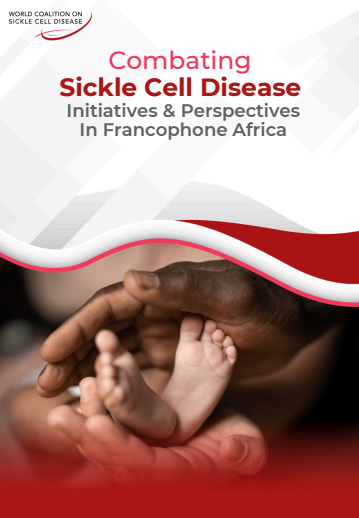
ReportINITIATIVES AND PERSPECTIVES ON SICKLE CELL IN FRANCOPHONE AFRICA
The report, available both in French and in English, brings to light the actions in favor of sickle cell disease patients in francophone Africa for the last three decades, with a focus on the efforts deployed by Senegal, Mali, and Burkina Faso. These countries illustrate different approaches to improving the situation by focusing on several key areas: the development of neonatal screening, improvement of health infrastructures and information systems, mobilization of communities and local health professionals, and the establishment of national policies.
Based on interviews with key experts and government representatives, the report was launched during a dedicated webinar in April 2026, emphasizing the importance of regional collaboration and approaches adapted to local realities, while highlighting best practices that could serve as models for other nations facing similar challenges.
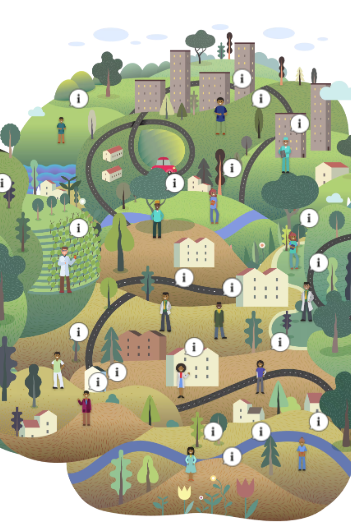
CampaignSICKLE CELL 360
Developed by WCSCD to enhance public understanding and awareness of sickle cell disorders, the campaign features interactive content drawn from patients, caregivers, researchers, advocates, and healthcare professionals worldwide. SickleCell360 breaks down stigma around the disease, fosters supportive communities, and advances patient-centered initiatives worldwide.
The platform includes 30 content pieces, from interviews to Q&As, quizzes, "day in the life" stories, and more.
By clicking through each profile, users will gain a richer, more holistic view of SCD’s impact and how we can collectively address the many challenges the disease presents.
Looking ahead, the campaign will serve as a central hub for advocacy and education, offering a rich collection of SCD resources and first-hand accounts for users.